


Today, as a consequence of the rand instability and political uncertainty in South Africa, the majority of local investors’ investment choice has shifted somewhat in favour of offshore assets. We continue to believe that global assets have a place in an investor’s portfolio. In fact, failure to sufficiently diversify a portfolio is one of the most common mistakes made by investors. Studies on optimal portfolios recommend a minimum offshore allocation of 20%−30% through the cycle for long-term investors.
Diversify your investment portfolio to include international assets
Beyond the opportunity to invest across a broader market, global markets have diversified the returns of South African investors, on average. The rationale for diversification is clear – South African assets are exposed to the local economy, while offshore assets offer access to developed and emerging economies. The world is changing: technology, medicine and urbanization are driving the global economy. Simply focusing on the South African stock market means an investor has no stake in companies that will drive global growth. These businesses are based in other countries such as Apple, Facebook, Uber, Coca-Cola and BMW.
A portfolio made up exclusively of South African focused businesses, which are more concentrated in consumer services, mining and resources and retail, would be underweight ‘new economy’ industries. So as a South African focused investor, you not only lose investment opportunities, but also the diversification benefits of investing in industries that are not represented on the JSE. A portfolio investing solely within the local stock market automatically excludes 99% of the global opportunity set.
Protect yourself against major price increases
Most of the goods and services that we consume as South Africans are imported. The thinking goes that because we purchase a significant portion of consumer goods from overseas markets, we should protect ourselves against these price increases by holding foreign currencies.
While this aspect of offshore diversification cannot be ignored (and certainly can have an impact on consumer spending), we believe it makes sense for investors to protect themselves from currency weakness. The weakness of the rand will likely remain a strong driver of increase in the prices of goods and services. All else being equal, we would expect the currency to continue to be a diversifier for non-South African investments from the standpoint that currency movements directly influence inflation between countries.
An opportunity to allocate money to cheap assets
It is the price you pay that counts in investing. Global stock markets returns move in cycles, and this creates opportunities to buy assets at very attractive prices. You can allocate assets to take advantage of any market inefficiencies across the world.
Note this is different from using the weakness of the rand, where investors only allocate funds offshore when they feel negative about the local currency. For many investors, making this decision is filled with uncertainty, so we have created model portfolios to remove this anxiety. We select offshore funds through a combination of qualitative and quantitative research, to remove the uncertainty of offshore investing.
Global equities still offer value
We continue to maintain that global diversification has merit. Our research suggests that, for long-term investment, international diversification can have a favourable effect on portfolio risk and returns. We see several fundamental factors at work that, in our view, make it likely that international investments will add value to a portfolio from a return and risk perspective over the next few years. We cannot speculate on the future path of returns, but we are confident that returns for South Africa and non-South Africa assets will continue to differ, leading to a continued benefit from diversification.
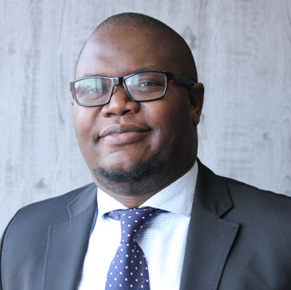
Owen Nkomo
Chief Executive Officer
Owen is the founder of Inkunzi Wealth Group and has over 14 years of industry experience. Prior to founding Inkunzi Wealth Group he held various leadership roles at Deutsche Bank, JPMorgan Chase and Citi. He has an Honours degree in Investment Management.